
Your roof is the first defense against Kentucky rain, hail, heat, and wind. Residential roofing spans leak repair, full replacement, storm restoration, and the gutters and fascia that keep water moving away from your home.
What is residential roofing? Planning, installation, repair, and maintenance of steep-slope and low-slope roof systems—plus flashing, ventilation, gutters, and related exterior components.
Why does it matter? One unchecked leak can ruin insulation and ceilings in a single storm season. Professional installation and timely repairs protect your investment.
Who is this for? Homeowners across Kentucky and Southern Indiana who want honest inspections, clear estimates, and crews who show up when promised.
What will you learn? How to spot problems, choose materials, understand costs and timelines, work with insurance, and how Elite KY Services Construction handles each project.

Table of Contents
- Services we provide
- Repair vs replacement
- Storm, hail, and wind in Kentucky
- Materials: asphalt, metal, flat
- Inspection and maintenance
- Insurance and financing
- Exterior: gutters, siding, paint
- Service areas
- Our process
- Cost factors and timelines
- Kentucky weather checklist
- DIY vs professional comparison
- Frequently asked questions
What Does Residential Roofing Services Include?
Core roofing:
Roof repair — localized fixes before leaks spread
Roof replacement — tear-off and new install
Emergency roof repair — active leak response
Roof leak repair — tracing entry points
Storm damage roofing — hail and wind restoration
Roof inspection and maintenance
Materials and commercial:
Asphalt shingle roofing
Metal roofing
Commercial roofing
Flat roofing
Business support:
Roof insurance claims
Roof financing
Exterior envelope:
Gutter installation
Siding installation
Exterior painting
Soffit fascia repair
Chimney flashing
Repair vs Replacement: How Do You Decide?
| Situation | Recommendation |
|---|---|
| Few missing shingles, sound deck | Repair |
| Widespread hail bruising | Replace affected slopes or full roof |
| Two layers already on deck | Usually full tear-off |
| Active leaks in multiple rooms | Likely replacement |
How Does Kentucky Weather Affect Your Roof?
Kentucky sees severe thunderstorms, hail, tornado risk, hot humid summers, and freeze-thaw cycles. Residential roofing systems here take more thermal movement and wind uplift than milder climates—ventilation and flashing detail matter year-round.
Checklist:
[ ] Inspect after every major storm cell
[ ] Keep gutters and downspouts clear
[ ] Verify attic ventilation is open
[ ] Trim trees that scrape shingles in wind
[ ] Photo-document condition for insurance
Residential Roofing Materials: What We Install
Asphalt shingles remain the most common steep-slope choice—strong color lines and straightforward repairs.
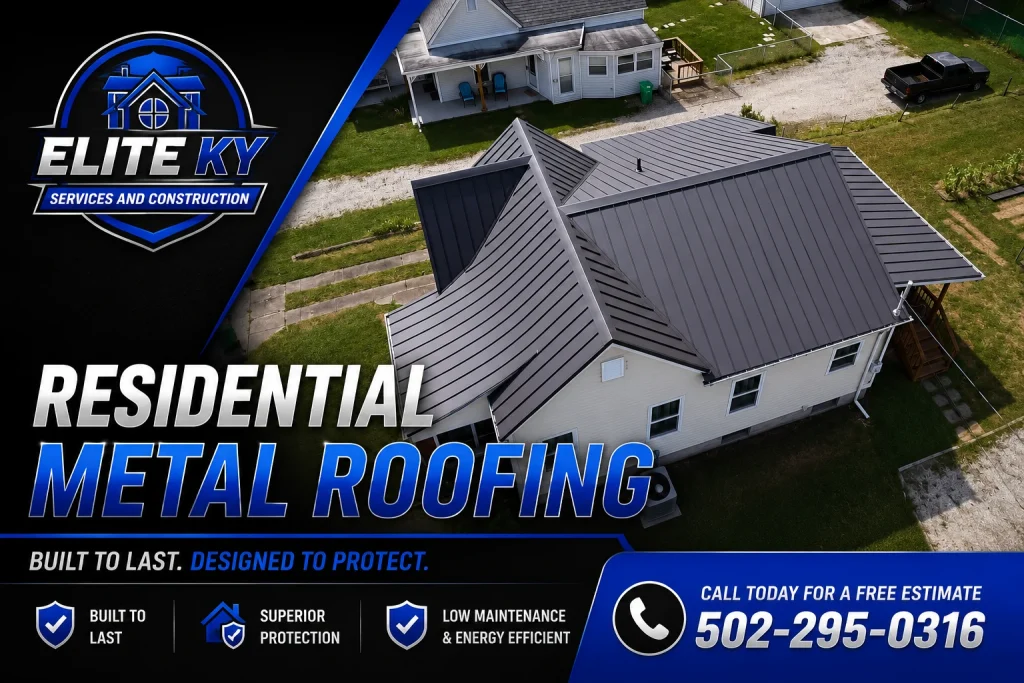
Metal roofing suits long-term owners who want durability and hail resilience when installed to spec.
Flat and low-slope membranes serve porches, additions, and commercial decks—see flat roofing.
Inspection, Maintenance, Insurance, and Financing
Annual or bi-annual roof maintenance costs less than emergency leak response.
After storms, roof insurance claims support helps you document damage and align scope with your carrier.
When cash timing is tight, roof financing keeps needed work on schedule.
What Areas Do We Serve?
How Does Our Process Work?
- You call or request an inspection — Tell us what you are seeing.
- On-site evaluation — Roof, attic when accessible, photos.
- Written estimate — Options explained in plain language.
- Schedule — Weather-aware planning.
- Install or repair — Manufacturer specs, cleanup, walkthrough.
What Affects Cost and Timeline?
| Factor | Effect |
|---|---|
| Square footage and roof pitch | Affects labor requirements, safety measures, and overall project cost. |
| Roofing material selection | Influences the total price, durability, and expected lifespan of the roof. |
| Roof deck condition | Damaged or rotted decking may require replacement, increasing the project scope. |
| Storm season demand | High demand after severe weather can impact scheduling and project timelines. |
Most roof repairs can be completed in a single day. A full asphalt roof replacement on a typical home is usually completed within one to three days, depending on the size of the roof, weather conditions, and any additional repairs that may be needed.
Residential Roofing: DIY vs Professional Comparison
| Topic | DIY | Professional Roofing Contractor |
|---|---|---|
| Safety | Working on a roof involves significant fall risks and requires proper safety equipment. | Professional crews use harnesses, fall protection systems, and follow established safety procedures. |
| Warranty Protection | Many manufacturer warranties may be reduced or voided if products are installed incorrectly. | Professional installation helps maintain manufacturer warranties and includes workmanship coverage. |
| Insurance Documentation | Limited documentation is typically available for insurance claims or future repairs. | Professional contractors provide inspection photos, project documentation, and detailed scope reports when needed. |
| Flashing & Weatherproofing | Critical flashing details around chimneys, valleys, and vents are often overlooked. | Experienced roofers install flashing according to manufacturer specifications and local building codes to help prevent leaks. |
Choosing a professional residential roofing contractor also means your roofing materials are properly registered for warranty coverage, your attic ventilation is evaluated as part of the project, and you have a trusted local company to call if your roof needs service after severe weather. Professional installation provides long-term peace of mind that extends well beyond the day the work is completed.
Residential Roofing Maintenance Calendar for Kentucky
Spring: Clear winter debris from gutters, check for ice-dam staining at eaves, and schedule inspection if hail passed through your county. Granule loss often shows up first in downspout splash zones.
Summer: Watch for heat-related curling on south slopes and ensure attic ventilation is not blocked by insulation. Trim branches that scrape shingles during afternoon storms.
Fall: Best window for planned replacement—moderate temperatures help sealants set before freeze-thaw cycles. Document roof condition before leaf cover makes walking surfaces slippery.
Winter: Active leaks still need response—we tarp and dry-in when interior water is present. Avoid walking icy roofs; use binoculars from the ground when safe.
How to Read a Residential Roofing Estimate
A useful residential roofing proposal separates tear-off, underlayment, field shingles, ridge vent, flashing rebuilds, and deck repair allowances. Vague lump sums make comparison shopping impossible and often hide rotten decking costs until day one.
Ask whether ice-and-water shield, drip edge, and manufacturer registration are included. Confirm who pulls permits, how change orders are handled, and what workmanship warranty applies. Photo documentation with your estimate makes insurance conversations and future resale disclosures easier.
Residential Roofing Warranties: What to Ask Before You Sign
Manufacturer warranties on shingles and metal products are separate from contractor workmanship coverage. For residential roofing, register eligible products promptly, keep ventilation specs on file, and understand what voids coverage—unapproved repairs, layered installs over wet deck, or missing intake ventilation are common pitfalls.
Workmanship terms should name who to call if a nail line shows through a ridge cap or a chimney flashing seep appears two seasons later. Local contractors with regional references outperform fly-by-night crews on warranty follow-through every time.
Residential Roofing Materials: How to Choose in Kentucky
Asphalt architectural shingles remain the default for steep-slope residential roofing in Kentucky because repairs are straightforward and color lines match most neighborhoods. Look for wind ratings that match your exposure—open fields and hilltops see more uplift than sheltered lots.
Metal roofing suits owners planning to stay ten years or more who want hail resilience and long service life when installed with proper clips and underlayment. Upfront cost is higher; lifecycle cost often favors metal on homes with complex geometry that would need frequent shingle repairs.
Low-slope membranes on porches, dormers, and additions require different detail than steep-slope work—see dedicated flat roofing guidance when those areas leak first.
Ventilation choice matters as much as surface material: balanced intake and exhaust extend shingle life and reduce ice-dam risk on north-facing eaves after Kentucky freeze-thaw cycles.
If you are comparing bids, line up material brands, underlayment type, ventilation plan, and flashing scope—not just bottom-line price. Two residential roofing proposals with the same square count can perform very differently over ten years when one skips ice-and-water shield or reuses old pipe boots.
Homeowners across Louisville, Shelbyville, Frankfort, and Southern Indiana also ask about timing: spring hail season and late-summer wind events compress schedules, while fall offers stable temperatures for full tear-offs. Whatever season you are in, start with roof inspection when you see granules in gutters, ceiling stains, or lifted shingles after a storm near home.
When to Schedule Residential Roofing Work in Kentucky
Spring hail season and late-summer wind events create inspection backlogs. If you notice granules in gutters, soft spots on shingles, or attic staining after a storm, schedule roof inspection before interior damage spreads.
Fall is a strong window for planned replacement: moderate temperatures help sealants set and crews can finish before winter freeze-thaw cycles stress new flashings. Winter emergency work still happens—we tarp and dry-in when leaks are active—but full replacements are easier to quality-check in dry weather.
Frequently Asked Questions
What residential roofing services do you offer?
Repair, replacement, storm response, inspections, maintenance, asphalt and metal systems, gutters, siding, and related exterior work—each with its own service page linked from this guide.
Do you serve Louisville and surrounding counties?
Yes. Elite KY Services & Construction proudly serves homeowners and businesses throughout Central Kentucky and Southern Indiana. Our primary service areas include Louisville, Shelbyville, Taylorsville, Frankfort, La Grange, Simpsonville, Mt. Washington, Shepherdsville, Bardstown, Elizabethtown, Jeffersontown, St. Matthews, Middletown, Prospect, Crestwood, Pewee Valley, Shelby County, Spencer County, Bullitt County, Oldham County, Jefferson County, Franklin County, Henry County, Anderson County, Nelson County, and many surrounding communities. We also serve Southern Indiana, including Jeffersonville, Clarksville, New Albany, Floyds Knobs, Sellersburg, Charlestown, and nearby areas. If you don’t see your city listed, contact us—we’re happy to let you know if we service your area.
How often should I inspect my roof in Kentucky?
Every one to two years, and always after major hail or wind nearby.
How long does a roof last in Kentucky?
Quality asphalt often lasts twenty to twenty-five years with proper attic ventilation and routine maintenance. Metal roofing systems can last significantly longer. Severe weather, poor ventilation, and unrepaired storm damage can shorten the life of any roofing system.
Will you help with insurance claims?
We provide documentation, meet with insurance adjusters when appropriate, and complete repairs or replacements according to the approved claim scope. Learn more on our Roof Insurance Claims page.
Do you offer financing?
Yes. Financing options are available for qualified homeowners. Visit our Roof Financing page after receiving your written estimate.
Are estimates free?
Yes. We offer free roof inspections and estimates for most residential and commercial roofing projects. Contact us to schedule an appointment.
Repair or replacement?
Roof repairs are ideal for localized damage when the overall roofing system remains in good condition. A full replacement is often recommended when the roof has reached the end of its lifespan or has sustained widespread storm damage.
Do you install metal and asphalt roofs?
Yes. We professionally install both asphalt shingle roofing and metal roofing systems.
How fast is emergency response?
We prioritize emergency roofing situations involving active leaks and storm damage whenever possible. Learn more about our Emergency Roof Repair services.
Do you handle commercial roofs?
Yes. We provide comprehensive commercial roofing services, including flat roofing systems for businesses and property managers.
What should I do after hail?
Take photos of any visible damage, avoid climbing onto the roof yourself, and schedule a professional inspection as soon as possible. Be cautious of unsolicited door-to-door contractors after storms. Learn more on our Hail Damage Roof Repair page.
Ready for Professional Residential Roofing?
Whether you need a leak fixed today or a full replacement planned, Elite KY Services Construction starts with inspection and honest scope for residential roofing across Kentucky and Southern Indiana. Call or request an estimate.