What to know about professional roof inspection includes
Living in Jefferson County, particularly across the diverse neighborhoods of Louisville Metro and even extending into Southern Indiana properties on our border, comes with specific weather challenges. The area experiences everything from summer thunderstorms that drop half an inch of rain in minutes to winter ice storms that can compromise structural integrity overnight. Homeowners, landlords, and property managers often find themselves facing a confusing array of questions when something goes wrong: “How do I know if my roof needs fixing?” or “What exactly happens before you send me a bill for repairs?”
Many people equate a roofing assessment with someone driving by your house in their pickup truck and glancing at the shingles through binoculars. While that can provide a surface-level opinion, it often misses critical details that lead to expensive leaks down the road. A true professional roof inspection include Louisville KY offers something far superior: a documented, condition-based evaluation of every component involved in shedding water and protecting your home from the elements.
This guide is designed for residents who want clarity over confusion. Whether you are concerned about recent storm damage, preparing to sell a property, or simply maintaining an older rental portfolio, understanding what constitutes a thorough examination empowers you to make informed decisions. We aim to provide honest recommendations without fear-mongering or unnecessary alarm. Your roof is your home’s first line of defense; treating it as such requires looking beyond the obvious cracks and curled shingles.
What Does a Professional Roof Inspection Actually Include?
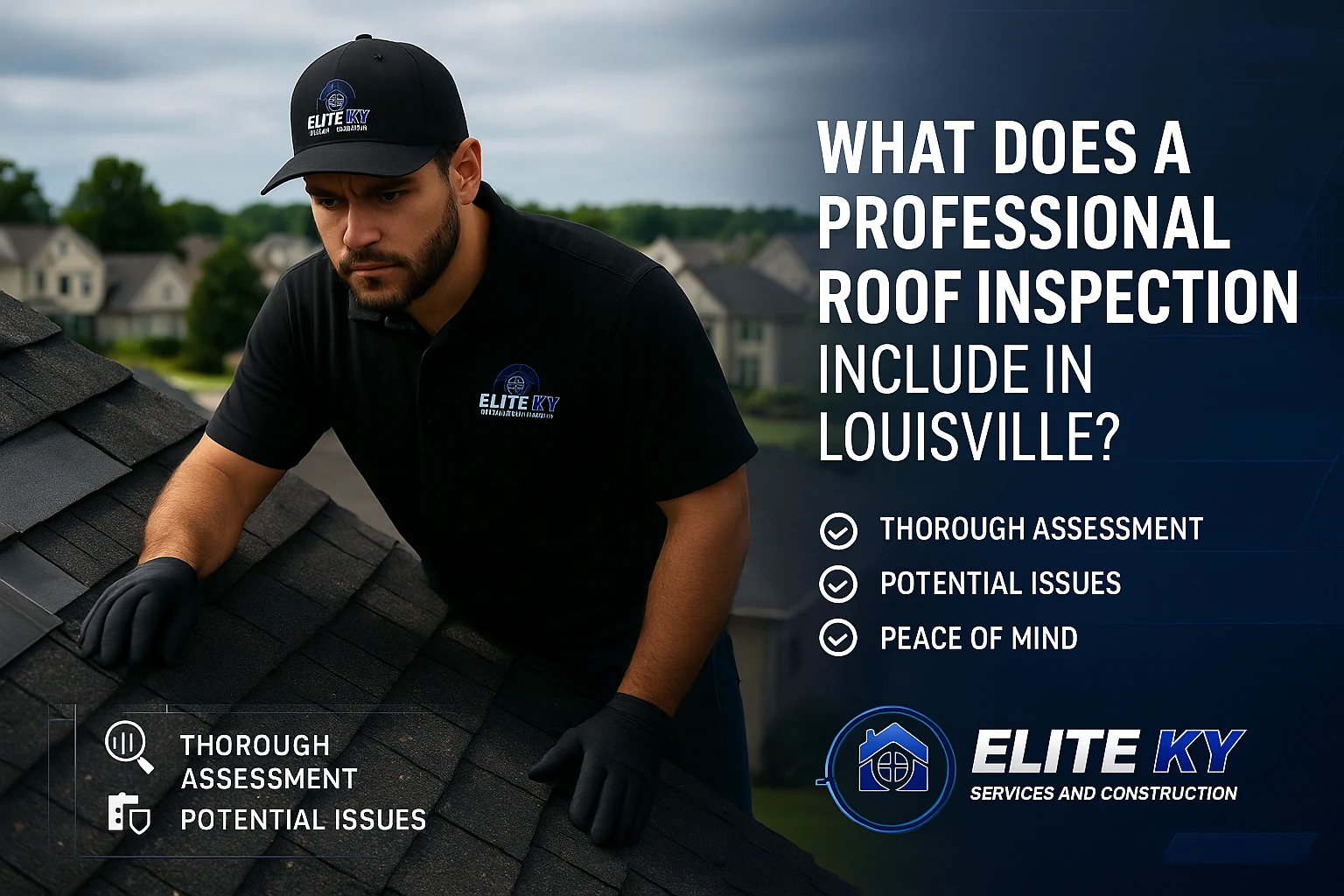
When people ask, what does a professional roof inspection include, they are often imagining someone walking on their attic floor or using binoculars to spot missing shingles. The reality of a high-quality evaluation by Elite KY Services & Construction is much more comprehensive. It involves a structured assessment that covers three primary zones: the exterior surface materials, the connective systems like gutters and downspouts, and the interior components within your attic space or crawlspace where moisture can hide before it reaches drywall.
The goal of this process isn’t just to tell you “you have a problem” but to explain exactly what that problem is and how significant the repair might be relative to your budget and insurance coverage. This detailed approach helps distinguish between normal wear and tear—like minor granule loss on an asphalt shingle roof—and active issues requiring immediate attention, such as compromised flashing or structural shifts from high winds.
When you are ready to talk through next steps, Schedule a free roof inspection.
For more detail on this topic, see Asphalt Shingle Roofing.
Industry context worth reviewing: Roof Inspection Guide: What To Expect & How It Works.
By understanding these specific steps before you schedule a visit, you can rest easier knowing that the team sent to your property will be looking for defects that a casual observer would miss. This proactive stance is vital in our region where Kentucky weather events often take homeowners by surprise. If water intrusion has already occurred inside your ceilings or walls after a storm, it indicates an exterior breach we must locate and seal permanently. We do not guess; we evaluate based on observable evidence to ensure you don’t need unnecessary roof replacements that aren’t actually required at this time.
The Core Steps of Our Comprehensive Roof Evaluation Services in Louisville Metro
A reputable comprehensive roof evaluation services Louisville Metro provider follows a strict checklist to ensure nothing is overlooked during the exam process for your home or small commercial building. This methodical approach ensures we capture data needed for accurate repairs or insurance claims later on. Here are the core components of our standard residential and light commercial assessment:
Exterior Surface Examination
We begin at ground level, often using ladders to safely access multiple angles of the roof structure without causing damage to existing materials. An inspector trained in this field looks closely at every shingle for signs of deterioration. This includes checking specifically to identify missing shingles as part of a standard guide on what constitutes valid defect evidence during an audit. We also inspect ridges, hips, and valleys where water flow accelerates; any separation or damage here is critical.
We examine the surface texture to look for granule loss in gutters and downspouts. Excessive granules indicate that your asphalt shingles are aging faster than expected due to UV exposure or hail impact common in our climate zones. We also verify flashing and drainage during roof check protocols, paying close attention to chimney boots, pipe collars, and vent seals where leaks frequently initiate if the sealant has failed over time.
Interior Leaks and Attic Verification
Even if your exterior looks pristine from a distance, water can infiltrate through tiny cracks or capillary action around flashings we cannot see easily from outside. To address whether a storm damage roof assessment include interior leaks is necessary for your claim validity, we may access the attic space using proper safety gear and lighting (if permitted).
Inside, our team checks deck boards for rot indicators such as soft spots or staining on plywood sheathing. We look upward to see daylight peering through gaps in shingles—a clear sign of active failure that needs immediate patching before rain arrives again. If you recently had severe weather here in the area, this interior verification is often crucial because hidden leaks under existing layers can cause mold growth and structural decay beneath your floor covering long after a leak has seemingly “stopped.”
Gutters and Downspouts
The roof system isn’t complete without proper drainage outlets for melted snow or heavy rainfall. A professional roof inspection include Louisville KY always evaluates the condition of gutters, fascia boards, and downspout alignment to ensure they aren’t contributing moisture issues behind brick veneer or siding materials.
Documentation Standards
Upon completing our review, we generate a written report containing high-resolution photos taken before leaving your property line where possible (with permission) alongside notes detailing observed conditions. This documentation is essential for warranty compliance roofing inspection requirements and helps insurance adjusters understand exactly what has been inspected so they process claims fairly without undervaluing valid damage found during professional assessment processes locally in Jefferson County or surrounding areas.
Hidden Issues: Attic Ventilation and Thermal Imaging Tools
Not every roofing problem is visible from the outside. In some cases, the first signs of trouble appear inside the attic, where poor ventilation, excess heat, or trapped moisture can contribute to damaged roof decking, insulation problems, mold growth, and premature deterioration of roofing materials.
That’s why checking the attic and ventilation system can be an important part of a thorough roof inspection. This is especially helpful for older homes, properties with a history of leaks, or homes surrounded by heavy tree coverage where airflow may be limited.
What We Look for Inside the Attic
When attic access is available and safe, we can visually inspect areas of the roofing system that cannot be evaluated from the exterior. We may look for:
- Water stains or signs of previous leaks
- Damp or deteriorating roof decking
- Mold or mildew
- Improper or insufficient ventilation
- Damaged or compressed insulation
- Daylight entering through unintended openings
- Condensation or excessive moisture
- Signs that heat and moisture are shortening the life of the roof
Finding these issues early can help identify problems before they develop into more expensive roof or structural repairs.
When Thermal Imaging May Help
Thermal imaging is not necessary for every roof inspection. However, when there is reason to suspect a hidden moisture problem or insulation issue, infrared technology may provide additional information without requiring roofing materials to be removed.
Thermal cameras detect temperature differences rather than moisture itself. Unusual hot or cold areas can help identify locations that may require closer inspection for water intrusion, missing insulation, air leaks, or other concealed problems.
Depending on the situation, additional tools such as moisture meters may also be used to help determine whether exposed roof decking or other materials contain excessive moisture.
Why Attic Ventilation Matters
Proper attic ventilation helps regulate heat and moisture throughout the roofing system. When an attic cannot ventilate properly, excessive heat can build up during the summer and condensation can develop during colder months.
Over time, these conditions can contribute to:
- Premature shingle deterioration
- Warped or damaged roof decking
- Moisture and mold problems
- Reduced insulation performance
- Higher heating and cooling costs
- A shorter overall lifespan for the roofing system
A roof should be evaluated as a complete system—not simply as shingles installed on top of a house.
At Elite KY Services & Construction, our goal is to identify the source of a roofing problem rather than simply address what is visible on the surface. When attic conditions or ventilation appear to be contributing to roof damage, we explain what we find and discuss practical options for correcting the issue.
If you’re concerned about a roof leak, ventilation problem, storm damage, or the overall condition of your roof, contact Elite KY Services & Construction to schedule a professional roof inspection in the Louisville Metro or Southern Indiana area.
Frequently Asked Questions About Professional Roof Inspections
What specific steps are included in a standard professional roof inspection in Louisville?
A professional roof inspection typically includes examining the overall condition of the roofing system, including shingles or other roofing materials, flashing, vents, penetrations, gutters, drainage areas, and visible signs of deterioration or damage.
When appropriate and safely accessible, the inspection may also include checking the attic for signs of leaks, moisture, inadequate ventilation, damaged decking, or other problems that may not be visible from the exterior.
The exact inspection can vary depending on the type, age, and condition of the roof.
How does an inspection for storm damage differ from a routine maintenance check for my home or rental property?
A routine roof inspection focuses on the overall condition of the roofing system and identifying normal wear, deterioration, maintenance concerns, and potential problems before they become more serious.
A storm damage inspection focuses more specifically on damage that may have resulted from hail, high winds, falling limbs, wind-driven rain, or other severe weather. This can include missing or lifted shingles, damaged flashing, punctures, impact marks, loosened roofing materials, and areas where water may be entering the structure.
If your Louisville-area property has recently experienced severe weather, it can be helpful to have the roof inspected even when there is no obvious leak inside the building.
Can your team provide detailed photos and written reports of defects found during the inspection?
When appropriate, Elite KY Services & Construction can document areas of concern with photos and explain what was found during the inspection.
The type of documentation provided may depend on the purpose and scope of the inspection. If you need specific documentation for a property transaction, insurance matter, rental property, or commercial building, let us know when scheduling so we can discuss what information you need.
Do you offer diagnostic tools like thermal imaging to find hidden leaks under existing shingles?
Thermal imaging may be useful in certain situations, but it is not required for every roof inspection. Infrared cameras detect temperature differences that can help identify areas requiring additional investigation, such as possible moisture intrusion, insulation gaps, or air leakage.
Thermal imaging does not see directly through shingles or automatically confirm the presence of a roof leak. When hidden moisture is suspected, the findings should be considered along with a visual inspection and, when appropriate, other diagnostic methods such as moisture readings.
Is a roof inspection covered by standard homeowner’s insurance policies in Jefferson County and surrounding areas?
Coverage varies by insurance company and individual policy. A routine roof inspection or maintenance inspection may not be covered simply because a homeowner wants the roof evaluated.
If the inspection is related to damage from a covered event such as wind, hail, or another storm, the insurance process may be different.
Homeowners should contact their insurance carrier or agent to determine what their specific policy covers. A roofing contractor can inspect and document roof conditions, but your insurance company ultimately determines whether a loss or related expense is covered under your policy.
How long does it typically take for Elite KY Services & Construction to complete a residential or small commercial roof inspection?
The amount of time required depends on the size, design, accessibility, roofing material, and condition of the property.
A straightforward residential roof may take less time to evaluate than a large or complex roofing system with multiple slopes, penetrations, additions, or areas requiring closer examination. Small commercial properties can also vary considerably depending on the type and size of the roofing system.
Our priority is to perform a thorough inspection rather than rush through the property. After evaluating the roof, we explain any areas of concern and discuss recommended next steps if repairs, maintenance, or replacement should be considered.